Minggu, 31 Juli 2011

GI Symbol News with Dr Alan Barclay

[ALAN]
Dr Alan Barclay

Is salt reduction the only answer to reducing the risk of dying of a heart attack or stroke?

Salt shaker

“Cutting down on the amount of salt has no clear benefits in terms of likelihood of dying or experiencing cardiovascular disease (CVD).” reports a new Cochrane Review. Part of the reason for this discouraging result is the simple fact that large enough trials have not been run for long enough periods of time to prove that sodium reduction really does reduce the risk of heart attack and strokes (CVD).

To date, the evidence suggests that cutting back on dietary sodium may help reduce blood pressure by 1.1–4.1 mmHg in people with normal and high blood pressure, respectively. But salt reduction is not the only way of lowering blood pressure and therefore reducing the risk of death from a heart attack or stroke.
  • Losing 10 kg of excess body weight will reduce blood pressure by 5–20 mmHg
  • Consuming a diet rich in fruits, vegetables, and low-fat dairy products with a reduced saturated and total fat content (i.e., the DASH diet) will lower blood pressure by 8–14 mmHg
  • 30 minutes a day of regular physical activity (a brisk walk will do) will lower it by 4–9 mmHg.
And focusing on sodium reduction alone often doesn’t work as the makers of Cambell’s Soup recently found out. If you lower the salt content of certain foods too much people simply won’t buy them anymore because they don’t like the taste …

What we need to remember is that there are many risk factors for the development of CVD (heart disease and stroke) including high blood pressure, high cholesterol and high blood glucose levels. For example, another mineral, potassium, also affects our blood pressure – high potassium intakes lower blood pressure which is why it’s important to eat more fruits, vegetables and wholegrains. And the type and amount of fat we eat has a powerful affect on our blood cholesterol levels.

Few people realise that the amount and type of carbohydrate that we eat also has an effect on our blood pressure. Dr Reaven was the first to describe the role of insulin resistance in the development of high blood pressure in the 1990s. Put simply, the kidney does not develop insulin resistance like the liver and muscles do, and as insulin levels get progressively higher in the blood, the kidneys increase their retention of sodium (in other words, we excrete less sodium in our urine), leading to higher blood pressure.

This is why an overall healthy diet that’s moderate in sodium, and lower in kilojoule/calories, saturated fat and high GI carbohydrates is the best way to reduce your risk of having a heart attack or stroke – not simply reducing the amount of salt or salty foods that you eat. And this is where front-of-pack labelling schemes like the GI Symbol can help. We developed category specific nutrient criteria for energy (calories/kilojoules), carbohydrate, fat, saturated fat, sodium, and where appropriate, fibre and calcium for the low GI Symbol to help make all-round healthy food choices in the supermarket easier for everybody, every day.


New GI Symbol

For more information about the GI Symbol Program
Dr Alan W Barclay, PhD
Chief Scientific Officer
Glycemic Index Foundation (Ltd)
Phone: +61 (0)2 9785 1037
Mob: +61 (0)416 111 046
Fax: +61 (0)2 9785 1037
Email: alan@gisymbol.com
Website: www.gisymbol.com

GI Update

Professor Jennie Brand-Miller answers your questions

Jennie

I have read that we should be basing our diet mostly on plant foods for good health. But I have also read that a moderate protein diet will keep us feeling fuller for longer and help us maintain a healthy weight. What plant foods have protein and which ones are low GI?
Protein is found in many plant foods, and the good news is that many are low or lower GI foods – check the GI Database (www.glycemicindex.com) for your favourites. To give you an idea how much protein you can get from plant foods, I have selected the following foods (with their sample serving sizes) from The Shopper’s Guide to GI Values – 2011 Australian edition.

LOW GI PLANT FOODS

Legumes (pulses)
  • ½ cup (150g) baked beans in tomato sauce (GI 49) provides around 7g protein
  • ½ cup (130g) canned, drained cannellini beans (GI 31) provides around 8g protein
  • 2/3 cup (125g) cooked red lentils (GI 26) provides around 9g protein
  • 1 cup (180g) cooked split peas (GI 25) provides around 12g protein
  • 1 cup (170g) cooked soy beans (GI 18) provides around 23g protein
  • 100g (3½oz) tofu (raw) provides around 12g protein (GI not relevant)
  • 1 cup (250ml) So Natural light soy milk (GI 44) provides around 5g protein
Breakfast cereals, breads and grains
  • ¾ cup (30g) Kelloggs Special K original (GI 56) provides around 6g protein
  • ¾ cup (45g) Kelloggs All-Bran (GI 44) provides around 7g protein
  • ¼ cup (30g) raw traditional rolled oats (GI 57) provides around 3g protein
  • 1 slice (35g) Tip Top 9-grain Original bread (GI 53) provides around 4g protein
  • 1 slice (40g) Burgen Soy-Lin bread (GI 52) provides around 6g protein
  • 1 cup (170g) cooked brown rice (GI 59–86, so check the tables and choose a low GI one) provides around 5g protein
  • 1 cup (170g) cooked basmati rice (GI 58) provides around 4g protein
  • 1 cup (180g) cooked pasta (GI 35–54) provides around 7g protein
  • 1 cup (180g) cooked fresh rice noodles (GI 40) provides around 3g protein
  • 1 cup (180g) cooked soba/buckwheat noodles (GI 46) provides around 9g protein
  • 1 cup (190g) cooked pearl barley (GI 25) provides around 6g protein
  • 1/2 cup (90g) cooked Nature First Organic quinoa (GI 53) provides around 4g protein
Nuts and seeds
  • A small handful (30g/1oz) of most nuts or seeds will deliver around 5g protein (GI not relevant)
New GI Values from SUGiRS
‘Be Natural’ low GI breakfast cereals


BE NATURAL CEREALS

SUGiRS tested these Be Natural breakfast cereals with water (after all, you can't ask volunteers to chow down dried cereal). The serving sizes used are those recommended by the manufacturer. Served with a little reduced fat milk or a dollop of fat-free yoghurt, the GI would be a little lower.
  • Be Natural Cashew, Almond, Hazelnut & Coconut Muesli GI 54 – 27g available carbs and 5g protein per 2/3 cup (45g) serving
  • Be Natural Multi-Grain Porridge GI 53 – 22g available carbs and 4.8g protein per sachet (40g) serving
  • Be Natural Pink Lady Apple & Flame Raisin Muesli GI 51 – 31g available carbs and 4.3g protein per 3/4 cup (45g) serving
Naked Pizza
Pizza is basically a flat bread (the crust) with toppings. That's why it's great to see a low GI grainy crust (it's over to YOU to choose the healthier toppings on offer). We have to say there was no shortage of volunteers when GI Labs in Toronto were testing Naked Pizza’s Original grainy pizza crust. Co-founder Jeff Leach says they set out ‘to create a better-for-you pizza without additives and with fewer calories, more protein and fibre and less fat that people can enjoy as part of a healthy lifestyle.’ The multigrain crust includes 10 grains and seeds plus prebiotic fibre from agave plants and added probiotics (for digestive health). A gluten-free crust is also available. ‘Our number one seller is the Superbiotic, followed by the Mediterranean and then the Omnivore,’ says Jeff.

PIZZA

  • 1 slice medium-sized Naked Pizza Original crust GI48 – 9g available carbs, 5g fibre and 3g protein plus sauce, cheese and toppings
Remember: pizza is for sharing! That means enjoy a slice or two with friends or family: don't eat the whole pizza on your own.

You can read more about Naked Pizza (what’s on the menu, what's in it and where you can buy it) HERE.

GI testing by an accredited laboratory
North America

Dr Alexandra Jenkins
Glycemic Index Laboratories
20 Victoria Street, Suite 300
Toronto, Ontario M5C 298 Canada
Phone +1 416 861 0506
Email info@gilabs.com
Web www.gilabs.com

Australia
Fiona Atkinson

[FIONA]

Research Manager, Sydney University Glycemic Index Research Service (SUGiRS)
Human Nutrition Unit, School of Molecular and Microbial Biosciences
Sydney University
NSW 2006 Australia
Phone + 61 2 9351 6018
Fax: + 61 2 9351 6022
Email sugirs@mmb.usyd.edu.au
Web www.glycemicindex.com

See The New Glucose Revolution on YouTube

Making the Most of GI News

Subscribe - it's free!
To subscribe to GI News, simply click on the SUBSCRIBE link in the top right-hand column. Help us be sure our email newsletter isn’t filtered as spam. Add "gifeedback@gmail.com" to your address book to ‘whitelist’ us with your filter, helping future issues of GI News get to your inbox.

Help us get the GI on more foods
To help bring more healthy Low GI foods to your local supermarket:
1. Buy products that carry the Certified Low GI symbol. They are delicious and healthy, and their sales support us.
2. Write a thank you email to the manufacturers’ of healthy low GI foods customer care departments to help ensure that they continue to bring healthy products to market.
3. Call or email manufacturers encouraging them to join the GI Symbol Program

Your questions answered
If you have posted a question in GI News, be assured that the GI Group will answer this as soon as possible. We welcome your views about our articles and other reader’s suggestions. Please POST your comments and questions on the site.

Want to search past issues of GI News?
Want to search the GI News Archive for a particular topic, food or recipe? Make the most of our search feature with Google. Simply enter the term in the space provided and press SEARCH.

Want to print a copy of this GI News edition?
Download and print the PDF.

Copyright
This website and all information, data, documents, pages and images it contains is copyright under the Copyright Act 1968 (Commonwealth of Australia) (as amended) and the copyright laws of all member countries of the Berne Union and the Universal Copyright Convention.

Copyright in the website and in material prepared by GI News is owned by GI News, Human Nutrition Unit, University of Sydney. Copyright in quotations, images from published works and photo libraries, and materials contributed by third parties including our regular contributors Alan Barclay, Jennie Brand-Miller, Johanna Burani, Diane Temple, Emma Stirling and Nicole Senior is owned by the respective authors or agencies, as credited.

GI News encourages the availability, dissemination and exchange of public information. You may include a link to GI News on your website. You may also copy, distribute, display, download and otherwise freely deal only with material owned by GI News, on the condition that you include the copyright notice “© GI News, Human Nutrition Unit, University of Sydney” on all uses and prominently credit the source as being GI News.

You must, however, obtain permission from GI News if you wish to do the following:
  • charge others for access to the work
  • include all or part of the work in advertising or a product for sale, or
  • modify the work.
To obtain such permission, please contact gifeedback@gmail.com

This permission does not extend to material contributed and owned by other parties. We strongly recommend that you refer to the copyright statements at their respective websites and seek their permission before making use of any such material, whether images or text. Please contact GI News if you are in doubt as to the ownership of any material.

Disclaimer
GI News endeavours to check the veracity of news stories cited in this free e-newsletter by referring to the primary source, but cannot be held responsible for inaccuracies in the articles so published. GI News provides links to other World Wide Web sites as a convenience to users, but cannot be held responsible for the content or availability of these sites.

© ® & ™ The University of Sydney, Australia

Minggu, 24 Juli 2011

Once you are overweight, chances are you will stay so.

The best policy is to prevent becoming overweight.
Rebecca Hardy, from the MRC: "a few lose weight but very few get back to normal. The best policy is to prevent people becoming overweight." Once people start to pile on the pounds in middle age their weight tends to continue "relentlessly upwards", according to a long-term study of 25,000 men and women. Source Telegraph.co.uk

Phen375

Sabtu, 23 Juli 2011

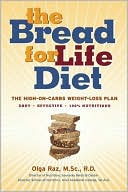
Bread for Life diet

The Bread for Life diet is based on the premise that eating generous amounts of bread every day will reduce cravings and help you lose 20 pounds in 8 weeks. The theory behind the diet is that complex carbohydrates act to increase serotonin levels, which in turn results in a reduction in cravings for sweet foods and decreased appetite. The Bread for Life diet is created by Israeli nutritionist, Olga Raz. The theory behind the diet is that complex carbohydrates act to increase serotonin levels, which in turn results in a reduction in cravings for sweet foods and decreased appetite. The foundation of the diet is bread; up to 12 slices of bread a day for women and 16 for men.


Raz does emphasize that this must be ‘light’ bread which contains 35-45 calories per slice. Heavier breads and those containing nuts and raisins may have up to 90 calories. These are not forbidden but not recommended for everyday use – and allowed as long as daily bread calorie quota maintained.

Hospital infections are riskier worldwide than flying

If you were admitted to hospital tomorrow in any country your chances of being subjected to an error in your care would be something like 1 in 10. This compared with a risk of dying in an air crash of about 1 in 10 million passengers, professor Liam Donaldson, England's former chief medical officer said. The risk of acquiring infections is significantly higher in intensive care units, and is particularly associated with the use of devices such as urinary catheters and ventilators, the report said. The impact of the infections implies longer hospital stays, higher chances of long-term disability, increased antibiotic resistance, a massive financial burden for health system, high costs for patients and their families, and excess deaths. Evidence suggests that health care-associated infection can be prevented and the burden by as much as 50 per cent or more.

Source: CBC News

Selasa, 19 Juli 2011

Dukan Diet, foods that you can eat

Anything not on the list is forbidden.

Lean beef, veal or rabbit, but not pork or lamb. Trim all fat and avoid fatty cuts. Eat meat grilled, roasted or boiled without butter, oil or cream, or ‘dry fried’ after rubbing surface of a frying pan with a few drops of vegetable oil on kitchen paper. Lean minced beef can be prepared as burgers or meatballs. Chicken and turkey (skin removed).


Specifically branded low-fat ham (cut any rind off) and dried beef (bresaola).
Liver (beef or chicken).
All fish: white, oily, fresh, frozen, dried, smoked or canned (in water or brine).

All shellfish.
Up to two eggs a day. Stick to 3-4 yolks per week if you have high cholesterol, but the white can be eaten without restriction. Non-fat dairy products, such as 0 per cent yoghurt, cottage cheese and skimmed milk.

Slim Weight Patch
 
Natural (plain) and flavoured yoghurts (coconut, vanilla, lemon) are allowed without restriction, but non-fat fruit yoghurts (which contain fruit puree) should be restricted to two per day.
Sweeteners, vinegar, spices, herbs, garlic, onion, gherkins, pickled onions (not in large quantities), lemon juice, mustard and salt (in moderation), sugar-free natural ketchup, sugar-free chewing gum.